Why Some Kids Cling While Others Wander


Chapter 8: Lifespan Development

Learning Outcomes

  • Describe the role of attachment in early childhood development
  • Evaluate how caregiver behavior influences child development
  • Apply psychological reasoning to real-world situations involving early relationships

Key Terms

attachment
long-standing connection or bond with others
avoidant attachment
characterized by child's unresponsiveness to parent, not using the parent as a secure base, and not caring if parent leaves
disorganized attachment
characterized by the child's odd behavior when faced with the parent; type of attachment seen most often with kids that are abused
resistant attachment
characterized by the child's tendency to show clingy behavior and rejection of the parent when they attempt to interact with the child
secure attachment
characterized by the child using the parent as a secure base from which to explore

The Playground Puzzle
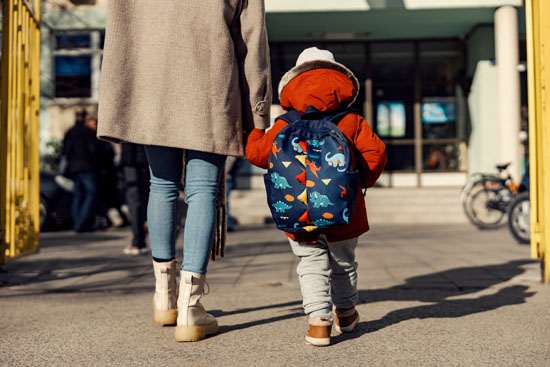
A parent walking their child into school

At a local daycare, two toddlers, Aariz and Siti, were playing outside. Aariz stayed near the teacher, checking in often and holding her hand when new kids arrived. Siti, on the other hand, wandered off to explore the sandbox, barely glancing back.

Their teacher, Ms. Rivera, noticed the difference. "Aariz likes to stay close," she said. "Siti's more independent." But what Ms. Rivera saw wasn't just personality; it was attachment.

Aariz had a secure attachment. He felt safe knowing his caregiver was nearby, so he could explore but return when he needed comfort. Siti showed signs of avoidant attachment. She didn't seek comfort or connection, even when something unfamiliar happened.

These patterns often begin in infancy and are shaped by how caregivers respond to a child's needs. When caregivers are warm, responsive, and consistent, children tend to develop secure attachments. When responses are unpredictable or distant, children may develop other styles, such as avoidant, resistant, or disorganized.

1. On Your Own

What describes secure attachment? Select the best answer.

How Attachment Is Studied

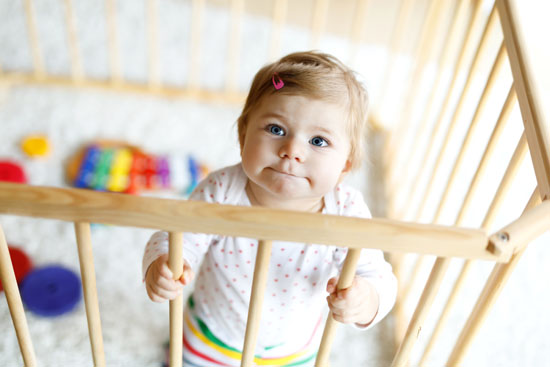
A child in a playpen

Psychologist Mary Ainsworth developed the Strange Situation to study attachment. In this experiment, a child is briefly separated from their caregiver and then reunited. Researchers observe how the child reacts. Do they cry, seek comfort, ignore the caregiver, or show confusion? These reactions help identify attachment styles, which can influence how children relate to others as they grow.

2. On Your Own

Determine whether the following statement is true or false.

Caregiver sensitivity helps children feel safe and supported, leading to disorganized attachment.

Explore the Concept

Check out this video to learn about how researchers are studying child-caregiver attachment and how it can affect the child's lifelong mental and physical health.

Aariz and Siti's Story

Over time, Ms. Rivera noticed that Aariz was more willing to try new things when she was nearby. Siti sometimes played alone and didn't ask for help, even when she was frustrated.

Ms. Rivera began working with Siti's parents to increase their responsiveness at home. They started using more eye contact, gentle touch, and verbal reassurance. Slowly, Siti began to seek comfort more often and showed more connection with others.

A person playing with some children in a daycare center

Attachment isn't fixed in place; it can grow and change with support.

3. On Your Own

What are signs of secure attachment? Select the three that apply.

Reflect & Respond

Answer the following questions to reflect on key ideas from the case study. Remember to print your work before leaving this page!

  1. What behaviors are common in securely attached children?
  2. How does caregiver sensitivity influence attachment?
  3. Why is the Strange Situation useful for studying development?
  4. Reflect on your own early relationships. What helped you feel safe and supported?
  5. How might a caregiver's responsiveness during early childhood influence a child's ability to seek help, form relationships, and manage emotions later in life?

References

American Museum of Natural History. (2011, December 6). Science bulletins: Attachment theory—Understanding the essential bond [Video]. YouTube. https://youtu.be/kwxjfuPlArY?si=NSksVDsH2mG5TAzW

Perpétuo, C., El-Sheikh, M., Diniz, E., & Veríssimo, M. (2023). Attachment to mother and father, sleep, and well-being in late middle childhood. International Journal of Environmental Research and Public Health, 20(4), Article 3399. https://doi.org/10.3390/ijerph20043399
This is an open-access article distributed under the terms of the Creative Commons Attribution 4.0 International License (CC-BY 4.0).

Photo Credits

Dusan Petkovic on Adobe Stock. "A mother entering the kindergarten yard with her preschooler boy."

Irina Schmidt on Adobe Stock. "Beautiful little baby girl standing inside playpen. Cute adorable child playing with colorful toy."

Катерина Євтехова on Adobe Stock. "a of a daycare center specifically for children of women veterans, with caregivers and children engaged in activities, women veterans, Support, developing programs."