Analyze how cultural, educational, and environmental factors influence international differences in IQ scores and student performance
Evaluate the limitations of standardized testing in diverse educational contexts using psychological research and real-world scenarios
Apply psychological theories of intelligence to develop inclusive strategies for supporting students from varied backgrounds
Key Terms
crystallized intelligence
characterized by acquired knowledge and the ability to retrieve it
cultural intelligence
ability with which people can understand and relate to those in another culture
fluid intelligence
ability to see complex relationships and solve problems
Flynn effect
observation that each generation has a significantly higher IQ than the previous generation
intelligence quotient
(also, IQ) score on a test designed to measure intelligence
Not So Standardized
Pooja Devri had always believed in the power of education to transform lives. As the principal of Harmony International Academy, a diverse K–12 school in a metropolitan U.S. district, she prided herself on fostering an inclusive, high-achieving environment.
But lately, something had been bothering her. Despite equal access to resources, some students were thriving while others struggled, particularly those who had recently immigrated from countries like Nigeria, Brazil, and Syria. Meanwhile, students from Finland, South Korea, and Germany consistently scored at the top of standardized assessments.
Pooja wanted answers. Why were these gaps appearing? And more importantly, what could she do about them?
1. On Your Own
Culturally Diverse IQs
She reached out to Dr. Chen, an educational psychologist who had worked with culturally diverse schools. After reviewing the school's data, Dr. Chen offered a perspective Pooja hadn't considered deeply before.
"Differences in student performance can reflect more than just classroom instruction," he said. "They can be shaped by a mix of factors: education systems in their home countries, health, even cultural attitudes toward learning."
He shared a recent expert survey that explored why intelligence quotient (IQ) scores differ across nations. The findings were nuanced: Education quality and quantity were the most important factors, followed by health, culture, and genetics. Surprisingly, test bias and discrimination were rated as relatively minor contributors. Dr. Chen also pointed to the Flynn effect, the trend of rising IQ scores across generations, as evidence that intelligence is shaped by changing environments.
IQ Challenge
Check out this IQ test challenge to experience the kinds of questions presented in an official IQ test.
2. On Your Own
Test Scores and Student Stories
Pooja reflected on her own students. She thought of Leila, a bright 10th grader from Syria who had missed 2 years of school due to conflict, and João, who had just arrived from Brazil and was still adjusting to English instruction. Their standardized test scores placed them below grade level, but Pooja knew those numbers didn't tell the full story. Leila was fluent in three languages and had a natural talent for storytelling. Her ability to draw on past knowledge and express it clearly is an example of crystallized intelligence. João had an intuitive grasp of mechanical systems and often helped fix things around the school. His quick thinking and ability to solve unfamiliar problems showed strong fluid intelligence. These students weren't underperforming; they were underrepresented by the metrics being used to measure them.
Pooja began to see that intelligence wasn't just about what a test could capture in a timed session. It was about resilience, adaptability, and the ability to learn in the face of adversity. The data might show gaps, but the stories revealed potential.
3. On Your Own
Explore the Concept
Interact with the following video to learn about the history of IQ testing.
Pooja's Next Steps
At the next staff meeting, Pooja shared her insights. "We can't change where our students come from," she said, "but we can change how we support them." She began not with data, but with stories: Leila's resilience, João's curiosity, and the many other students whose brilliance wasn't reflected in their test scores. In telling these stories, she explained how factors like prior education, health, and cultural expectations could shape performance in ways that standardized tests couldn't fully capture.
Amina's parents already practice many of these habits and offer to help translate the notes for families who struggle with reading. Bilal's father doesn't respond at first, but after a few weeks, he starts asking Bilal about school more often. Sana's parents begin leaving her phone outside her room during study time, a small change that helps her focus.
Together, they brainstormed new strategies: multilingual support programs, mentorship initiatives, and partnerships with local health providers. Pooja didn't just share insights; she sparked a movement. Her team left the meeting informed and inspired to see intelligence as something dynamic, contextual, and deeply human.
Charging Forward
As Pooja walked through the school halls later that week, she noticed something different, not in the students but in herself. She no longer saw test scores as fixed indicators of ability, but as reflections of complex, intersecting factors: opportunity, health, culture, and yes, sometimes even genetics. More importantly, she saw her role as a builder of bridges instead of a gatekeeper of achievement. She began to recognize that cultural intelligence, the ability to understand and adapt to different cultural norms, was essential for helping students thrive in a diverse school community. With renewed clarity, she committed to leading with empathy, evidence, and action, knowing that understanding the roots of intelligence was only the beginning of helping it grow.
Reflect & Respond
Answer the following questions to reflect on key ideas from the case study. Remember to print your work before leaving this page!
How might your own cultural or educational background influence the way you perform on standardized tests?
What are some limitations of using IQ scores to measure intelligence in diverse student populations?
If you were in Pooja's position, what strategies would you prioritize to support students from underrepresented backgrounds?
How can educators balance the use of data with the need to understand individual student stories?
What role do psychological theories of intelligence play in shaping educational policy and classroom practices?
References
Rindermann, H., Becker, D., & Coyle, T. R. (2016). Survey of expert opinion on intelligence: Causes of international differences in cognitive ability tests. Frontiers in Psychology, 7, Article 399.https://doi.org/10.3389/fpsyg.2016.00399 This is an open-access article distributed under the terms of the Creative Commons Attribution 4.0 International License (CC-BY 4.0).
Dzianis Vasilyeu on Adobe Stock. "Depressed woman cries, feeling lack of motivation for development, and pulls piece of puzzle out of head. Girl with mental health disorder crying, needing support from friends and boyfriend."
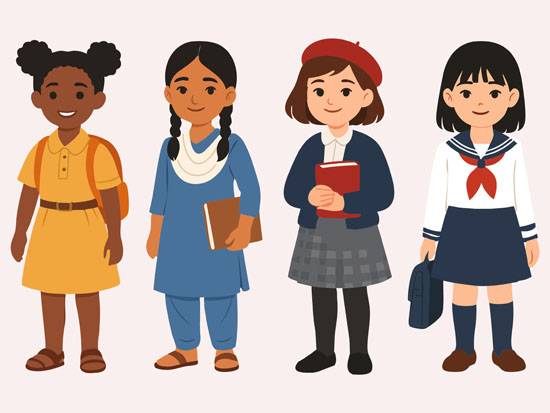
Svutlana on Adobe Stock. "Four schoolgirls from different cultural backgrounds stand side by side, each wearing a distinct traditional or regional school uniform."
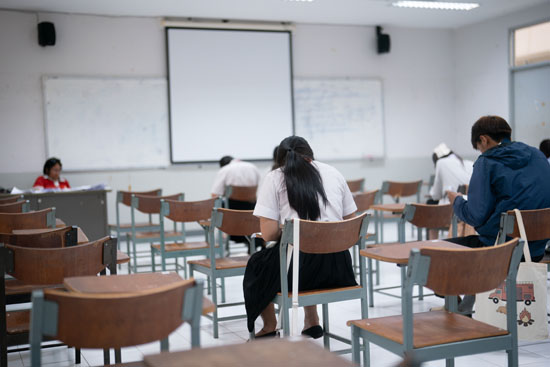
EduLife Photos on Adobe Stock. "University Students Taking an Exam in a Classroom."