Analyze how different levels of sensory realism in virtual environments influence human perception and behavior, particularly in the context of food consumption
Evaluate the psychological mechanisms behind sensory-specific satiety and hedonic adaptation, and how these are affected by virtual and multisensory stimuli
Interpret experimental findings related to presence, motion sickness, and snack choice to understand the broader implications of VR on real-world decision-making and sensory experience
Key Terms
bottom-up processing
system in which perceptions are built from sensory input
inattentional blindness
failure to notice something that is completely visible because of a lack of attention
olfactory receptor
sensory cell for the olfactory system
perception
way that sensory information is interpreted and consciously experienced
top-down processing
interpretation of sensations is influenced by available knowledge, experiences, and thoughts
VR for Real?
Miguel, a psychology student, volunteered for a study on food perception. When he arrived, he was told he'd be "eating" chocolate virtually. Wearing a virtual reality (VR) headset, Miguel found himself in a digital lab, holding virtual chocolates. In one version, the chocolates even smelled like the real thing.
Miguel mimicked eating nine chocolates. Oddly, the experience felt satisfying. This reaction may be explained by bottom-up processing, where Miguel's perception was built from the sensory input provided by the VR environment. Afterward, when offered a real snack, Miguel chose chocolate over a banana, despite not having eaten anything real.
Later, Miguel learned that others in the study who ate real chocolate reported less enjoyment over time. But those in VR? Their enjoyment stayed the same.
1. On Your Own
Provide each cluster with the synesthesia type it includes in the following table. Remember to print your work before leaving this page!
Condition
Enjoyment Experience
real chocolate
VR chocolate (with smell)
VR chocolate (no smell)
Sensory-Specific Satiety
Sensory-specific satiety (SSS) is the decline in pleasure from consuming the same food repeatedly. In the real world, this helps us maintain a varied diet. But in VR, the lack of actual taste and texture may prevent this decline, keeping enjoyment stable.
SSS is not only a mechanism that helps regulate food intake, but it also plays a role in maintaining dietary variety. It occurs when the pleasure derived from a specific food decreases more rapidly than for other foods not currently being consumed. This effect is typically observed with real food, where repeated exposure to the same taste, texture, and aroma leads to a decline in enjoyment. However, in virtual environments, especially those lacking full gustatory input, this decline may be delayed or absent.
The study found that participants in VR conditions did not experience the same hedonic decline as those consuming real chocolate, suggesting that the absence of actual taste and texture may disrupt the typical SSS response. This opens up new questions about how virtual simulations might bypass or alter natural satiety cues.
2. On Your Own
Is VR Influential?
The study demonstrated that virtual reality can significantly influence real-world behavior, even in the absence of actual consumption. Participants who interacted with virtual chocolate, especially those exposed to olfactory cues, were more likely to choose chocolate over a healthier alternative afterward. This suggests that stimulation of olfactory receptors played a key role in shaping participants' preferences.
3. On Your Own
Multisensory Integration
Interestingly, adding a chocolate scent didn't increase the sense of "presence" in VR. Some participants even felt frustrated, smelling chocolate but not tasting it. This highlights the complexity of multisensory integration and the "uncanny valley" of VR realism. This could be an example of inattentional blindness, where participants failed to notice the absence of taste because their attention was focused on the visual and olfactory cues.
VR Tricks the Senses
This study shows how VR can "trick" the senses by altering enjoyment, influencing choices, and even bypassing natural satiety. The immersive nature of VR, combined with sensory elements like smell and visual realism, appears to activate cognitive and emotional responses similar to those triggered by real food. These findings highlight VR's potential as a powerful tool in shaping behavior, with implications for marketing, health interventions, and psychological research. This influence may also reflect top-down processing, where participants' expectations and prior experiences shaped how they interpreted the virtual chocolate.
Explore the Concept
Check out this video exploring how VR tricks our brains.
Reflect & Respond
Answer the following questions to reflect on key ideas from the case study. Remember to print your work before leaving this page!
How did the inclusion of olfactory cues in the VR environment influence participants' perception of realism and enjoyment? Consider how smell interacts with other senses and whether it enhanced or disrupted the immersive experience.
Why might participants in the VR conditions have been more likely to choose chocolate over a banana after the experiment?
In what ways might VR be used to promote healthier eating behaviors, and what ethical considerations should be taken into account? Explore both the potential benefits and risks of using immersive technology to influence behavior.
Zholzhanova, D., Debattista, K., Wei, S., Ocean, N., & Chalmers, A. (2025). Virtual chocolate: The role of olfactory cues in multisensory VR on perceived realism, food enjoyment, and snack choices. Virtual Reality, 29, Article 104.https://doi.org/10.1007/s10055-025-01175-4 This is an open-access article distributed under the terms of the Creative Commons Attribution 4.0 International License (CC-BY 4.0).
Photo Credits
kite_rin on Adobe Stock. "Young man using virtual reality headset. VR, future, gadgets, technology concept."
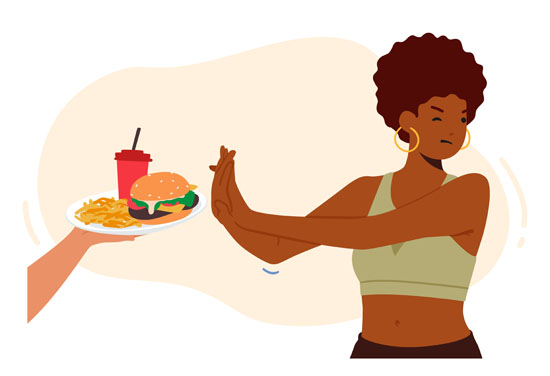
Anna Syvak on Adobe Stock. "Woman Character Confidently Declined the Unhealthy Foods Offered To Her, Choosing To Prioritize Health And Well-being."
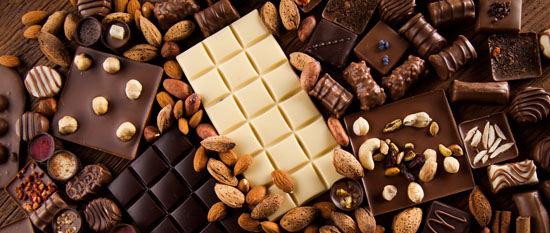
Sebastian Duda on Adobe Stock. "Cinnamon, Dark chocolate with milk and candy sweet."