Describe how neuroimaging technologies can reveal cognitive and emotional traits
Evaluate ethical concerns related to privacy, consent, and discrimination in brain-based hiring
Apply psychological and ethical reasoning to real-world hiring scenarios involving neuroscience
Key Terms
functional magnetic resonance imaging (fMRI)
MRI that shows changes in metabolic activity over time
Getting the Job
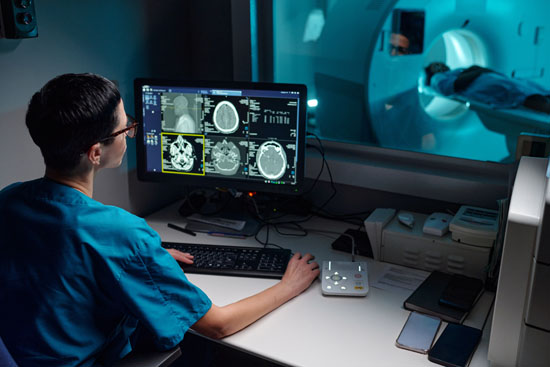
Jouri and Fatima, both recent graduates with honors in cognitive science, are finalists for a highly competitive analyst role at a cutting-edge tech firm. The company is known for both its innovation and its unconventional hiring practices. During the final round, the candidates are informed that the company uses functional magnetic resonance imaging (fMRI) to assess traits like risk aversion, emotional regulation, and attention control. The scans are technically voluntary, but candidates are told that "most successful hires choose to participate."
Jouri is fascinated. "It's like a personality test but scientific," he says. "If it helps them find the right fit, why not?" He's always been curious about how the brain works and sees this as a chance to stand out.
Fatima, however, feels a knot in her stomach. "What if they misinterpret the data?" she asks. "What if something shows up that I didn't even know about?" She's read about neuroethics and worries about cognitive liberty, the right to keep one's thoughts and brain data private. She wonders whether this is truly about fairness or just a new form of surveillance.
The recruiter assures them that the scans are used to reduce implicit bias and improve team dynamics. But Fatima isn't convinced. She starts to question whether the company is using neuroscience to support fairer hiring decisions or to make assumptions about people based on brain data they don't fully understand.
Explore the Brain: Interactive 3-D Model
Use this 3-D Brain to explore the regions that fMRI scans focus on and consider how this information might influence hiring decisions.
1. On Your Own
Behind the Brain Scan
The use of fMRI in hiring is part of a growing trend in neurotechnology. Advocates argue that brain imaging can reveal traits that traditional interviews miss, like how someone handles stress or makes decisions under pressure. Critics warn that these scans can be misleading, invasive, and even discriminatory.
For example, a candidate might be flagged for a brain pattern associated with impulsivity, even if they have never acted impulsively in a professional setting. Others might show signs of past trauma or mental health conditions. This data could unfairly influence hiring decisions.
There is also the issue of informed consent. Do candidates truly understand what they're agreeing to when they sign the waiver? And how secure is this deeply personal data once it is collected?
As Fatima reflects on these questions, she realizes that the scan is not just about getting a job. It raises broader concerns about how neuroscience is being used in society. Are we enhancing fairness in hiring, or introducing new forms of bias through misunderstood data?
Explore the Concept
Check out this video that explains what an fMRI scan shows.
2. On Your Own
Imagine you are Fatima, a strong candidate for a job that requires a voluntary brain scan as part of the hiring process. You feel uncomfortable about the scan and its implications. What would you choose to do, and why?
Would you agree to the scan to stay competitive?
Would you decline and risk losing the job?
Would you ask for more information about how the data is used?
Explain your decision and the ethical or psychological reasoning behind it. Remember to print your work before leaving this page!
Real-World Consequences
Jouri agrees to the scan and is hired. He's excited to join a team that values innovation and neuroscience. Fatima, after much deliberation, declines. She doesn't feel comfortable handing over her brain data without clearer safeguards.
Weeks later, Fatima learns through a former classmate that the company flagged her as "emotionally reactive" based on her interview responses, a trait they believe correlates with poor team fit. She was stunned. "Was that a fair assessment?" she wonders. "Or was it a biased interpretation of my behavior?"
Fatima begins to question whether the company's use of neuroscience truly reduces bias or simply replaces one kind of judgment with another, more high-tech version.
Reflect & Respond
Answer the following questions to reflect on key ideas from the case study. Remember to print your work before leaving this page!
How might the use of fMRI in hiring affect diversity and inclusion efforts within a company?
Would you be comfortable with employers using brain scans in hiring? Why or why not?
What rights should individuals have over their brain data?
How could pressure to conform, like the suggestion that "most successful hires choose to participate," influence a candidate's decision-making?
Should candidates have the right to access and challenge interpretations of their brain scan data?
References
Brown, C. M. L. (2024). Neurorights, Mental Privacy, and Mind Reading. Neuroethics, 17(34).https://doi.org/10.1007/s12152-024-09568-z This is an open-access article distributed under the terms of the Creative Commons Attribution 4.0 International License (CC-BY 4.0).
StratfordProductions on Adobe Stock. "Unemployed young african american woman feeling stressed about tedious waiting sitting in queue with other candidates for job interview."
pressmaster on Adobe Stock. "Medical professional reviewing patient's MRI images on computer monitor with patient in MRI machine in background. Hospital equipment and technology setup visible."
Yingyaipumi on Adobe Stock. "Businessman handshake for teamwork of business merger and acquisition,successful negotiate,hand shake,two businessman shake hand with partner to celebration partnership and business deal concept."