What Makes Psychology a Science?


Chapter 1: Psychological Science

Learning Outcomes

  • Analyze the limitations of traditional dualistic models in psychology
  • Understand the concept of comportment and its contrast with behavior
  • Reflect on the implications of redefining psychology as a human science

Key Terms

behaviorism
focus on observing and controlling behavior
empirical method
method for acquiring knowledge based on observation, including experimentation, rather than a method based only on forms of logical argument or previous authorities
humanism
perspective within psychology that emphasizes the potential for good that is innate to all humans
introspection
process by which someone examines their own conscious experience in an attempt to break it into its component parts
psychology
scientific study of the mind and behavior
Psychological Data

Yusuf had always been a curious student. He chose psychology because he wanted to understand people: what made them tick, why they struggled, and how they healed. But halfway through his second semester, he felt disillusioned.

"We keep talking about variables, brain scans, and experiments," he told his advisor. "But I signed up to study people, not just data."

His advisor handed him a dense-looking article by Marino Pérez-Álvarez and said, "This might help you see psychology differently."

That night, Yusuf read the article. It was challenging, but something clicked. The author was not just critiquing psychology's methods; he was offering a new way to think about what psychology is. Yusuf began to question whether the field had become too focused on behaviorism, which emphasizes observable actions while often ignoring the meaning behind them. He wondered if psychology had lost sight of its human roots.

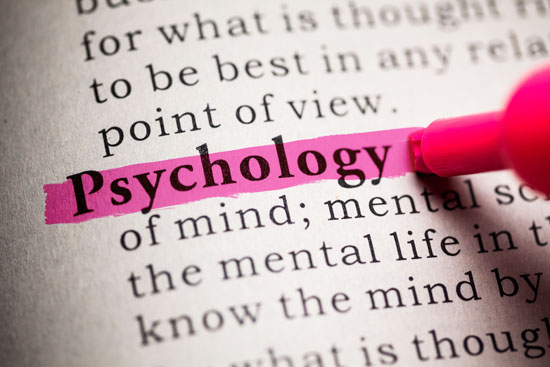
A picture of a dictionary page with the term 'psychology' highlighted

The Problem With Dualism

The article described how psychology had long been trapped in a dualistic model: dividing the mind and body, the internal and external. Yusuf realized this was exactly what bothered him. He had been taught to treat thoughts and behaviors as separate, measurable things, but in real life, people were not so easily split.

He thought back to his first-year course where introspection was introduced as a method for exploring consciousness. At the time, it had seemed outdated compared to brain imaging and statistical analysis. Now, he saw that introspection might still have value, especially when trying to understand lived experience. Psychology, he began to realize, was not just about data. It was about meaning.

1. On Your Own

What realization helped Yusuf begin to reconnect with his interest in psychology? Select the best answer.

Comportment vs. Behavior

The article introduced a term Yusuf had never heard before, comportment. It described how people engage with the world, not just what they do, but how they do it, shaped by meaning, culture, and context.

Yusuf thought about his younger brother, who struggled in school. Teachers said he had "behavioral issues," but Yusuf saw something deeper: frustration, fear, and a longing to be understood. That was not just behavior; it was comportment.

He began to see how the empirical method, which relies on observation and experimentation, might miss the richness of human experience if used alone. His brother's actions could not be fully understood through data points or lab settings. They required empathy, context, and a broader view of what it means to be human.

An image of a young person writing notes with a disgruntled expression

2. On Your Own

Which of the following describes "comportment" as Yusuf now understands it? Select the three that apply.

A New Kind of Science

Yusuf had always believed science meant objectivity, control groups, and replication, but the article challenged that. It argued that psychology, as a human science, needed to embrace pluralism: different methods for different questions.

He remembered a classmate's research on grief in immigrant families. It did not fit neatly into a lab experiment, but it was powerful, real, and deeply human. Maybe that was science, too.

Yusuf began to appreciate the perspective of humanism, which emphasizes the innate potential for good in all people. This view aligned with his desire to study psychology in a way that honored complexity, emotion, and culture. He realized that scientific rigor did not have to mean emotional distance. This perspective challenged the idea that psychology must always follow the same rules as the natural sciences and opened the door to viewing it as a human science with its own methods.

3. On Your Own

What does Yusuf now believe about the scientific method in psychology? Select the best answer.

A Personal Shift in Perspective

Yusuf began to see psychology not as a mirror that reflects people's minds, but as a map, a way to navigate the complex terrain of human life. He did not need to choose between science and meaning. He could study people as they are: embodied, emotional, cultural, and contextual.

He decided to change his research focus. Instead of studying attention through reaction times, he would explore how students experience focus and distraction in different learning environments. It would not be easy to measure, but it would be real.

His new approach would still involve observation, but it would also include interviews, journaling, and reflective methods. He wanted to understand not just what students did, but how they felt and why they responded the way they did. Psychology, he now believed, was about people. While his new approach was more reflective and qualitative, it still relied on the empirical method by grounding insights in lived experience and observation.

Two people brainstorming in the office

4. On Your Own

How did Yusuf's understanding of psychology change after reading the article? What new direction did he choose for his studies? Remember to print your work before leaving this page!

Subject and Comportment Psychology

Yusuf's journey reflects a growing movement in psychology, one that seeks to move beyond rigid definitions and embrace the full richness of human experience. By shifting from "mind and behavior" to "subject and comportment," psychology may finally become the science of what it truly means to be human.

Explore the Concept

Review this video that explores psychology's categorization as a science.

Reflect & Respond

Answer the following questions to reflect on key ideas from the case study. Remember to print your work before leaving this page!

  1. Yusuf felt disconnected from psychology when it focused too much on data and experiments. Have you ever felt similarly about a subject you were studying? What helped you reconnect with its deeper meaning?
  2. How does the concept of "comportment" challenge traditional ideas of behavior in psychology? Can you think of a real-life example where someone's actions were better understood through their context and intentions rather than just observation?
  3. If you were designing a psychological study based on Yusuf's new perspective, what methods would you use? How would you ensure the study respects the complexity of human experience?
  4. The article helped Yusuf see psychology as a map rather than a mirror. What does that metaphor mean to you? How might it influence the way psychologists approach mental health, education, or social issues?

References

Pérez-Álvarez, M. (2018). Psychology as a science of subject and comportment, beyond the mind and behavior. Integrative Psychological Behavioral Science, 52, 25–51. https://doi.org/10.1007/s12124-017-9408-4
This is an open-access article distributed under the terms of the Creative Commons Attribution 4.0 International License (CC-BY 4.0).

SciShow Psych. (2017, March 6). Is psychology a science? [Video]. YouTube. https://www.youtube.com/watch?v=Zohkzd0MYiI

Photo Credits

Feng Yu on Adobe Stock. "Psychology."

Pierre on Adobe Stock. "A sad Indian teenage boy feeling stress and pressure studying for a high school or college exam in a library. A tired student with anxiety having difficulties with learning a home work assignment."

Drazen on Adobe Stock. "Close-up of business team brainstorming while working on mind map in the office."