Mental Health Around the World


Chapter 15: Psychological Disorders

Learning Outcomes

  • Analyze global trends in adolescent anxiety disorders using epidemiological data and psychological frameworks
  • Evaluate the impact of socioeconomic disparities, bullying, and the COVID-19 pandemic on youth mental health
  • Apply psychological concepts to real-world case narratives to identify risk factors and propose evidence-based interventions

Key Terms

anxiety disorder
characterized by excessive and persistent fear and anxiety, and by related disturbances in behavior
social anxiety disorder
characterized by extreme and persistent fear or anxiety and avoidance of social situations in which one could potentially be evaluated negatively by others

Anxious Beginnings

Samira was 14 when the world began to feel heavier.

She had always been a bright, curious student in Mumbai. She was always eager to answer questions in class, quick to laugh with friends, and passionate about her dream of becoming a doctor. But something changed during her second year of secondary school. It started with a subtle unease: a racing heart before presentations, a reluctance to raise her hand, a growing sense that her classmates were watching her too closely. These symptoms were consistent with social anxiety disorder, which involves persistent fear of social situations where one might be judged or evaluated negatively.

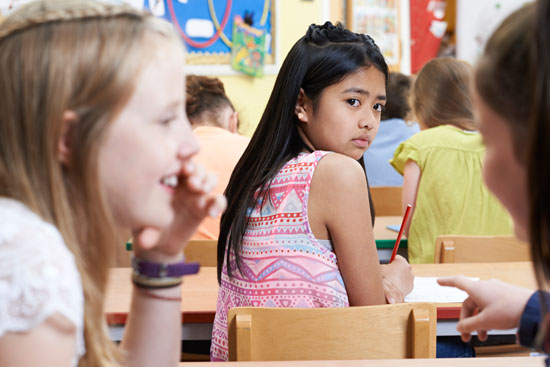
A young student, looking behind their shoulder to see two students whispering to each other

Then came the whispers. A few students mocked her accent when she spoke English. Others excluded her from group projects. The teasing escalated into bullying, with online messages, cruel jokes, and social isolation. Samira began to dread school. Her mornings were filled with stomach aches and tears and her nights with sleepless anxiety.

By the time the COVID-19 pandemic hit, Samira was already struggling. The lockdowns, the shift to online learning, and the isolation from her few remaining friends pushed her deeper into anxiety. She stopped attending virtual classes. Her parents, worried but unsure how to help, watched her retreat into silence.

1. On Your Own

Which of the following factors contributed most significantly to the rise in adolescent anxiety disorders globally between 2019 and 2021? Select the best answer.

Explore the Concept

Check out this video to learn about teenagers' experiences with anxiety.

The Global Picture

Samira's experience mirrors a global trend. Between 1990 and 2021, anxiety disorders among adolescents and young adults surged, especially after 2019. Girls like Samira were disproportionately affected, with higher disability-adjusted life years (DALYs) than boys. A DALY is a measure used in public health to quantify the overall burden of disease. It combines the years of life lost due to premature death and the years lived with disability. In the context of anxiety disorders, DALYs reflect how much healthy life is lost due to the psychological and social impairments caused by these conditions. This means that Samira's story is not just personal; it's part of a growing public health concern that spans continents, cultures, and classrooms.
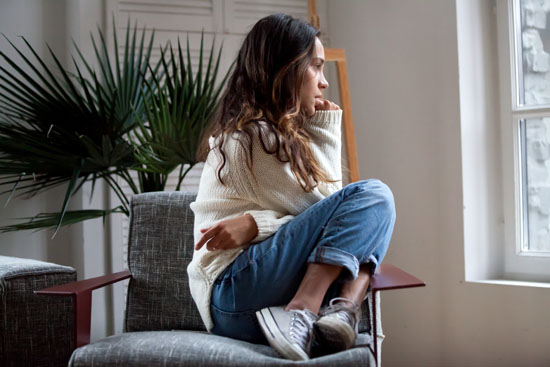
A person, curled up and concerned, looking out the window

The burden of anxiety is not evenly distributed. In tropical Latin America, the incidence rate reached over 1,500 cases per 100,000, which is the highest globally. Meanwhile, East Asia saw a slight decline, suggesting regional differences in cultural attitudes, health care access, and reporting practices. These disparities are shaped by the socio-demographic index (SDI), a measure that combines income, education, and fertility rates to assess a region's development status.

Regions with middle SDI, like parts of South Asia and Central Latin America, reported the highest number of cases. But it was the high SDI regions, such as Western Europe and North America, that saw the steepest increases. This may reflect better diagnostic infrastructure and growing awareness, but it also points to rising pressures in more industrialized societies: academic competition, social media exposure, and economic stress.

At the national level, India had the highest number of adolescent anxiety cases, while Portugal recorded the highest incidence rate per capita. Mexico experienced the fastest growth in both incidence and DALYs, highlighting how rapidly anxiety can escalate in certain environments. In contrast, countries like Mongolia and Taiwan saw declines, possibly due to cultural resilience or underreporting.

These global patterns reveal a troubling truth: Anxiety is becoming a defining feature of adolescence in the 21st century. Whether in bustling cities or rural villages, young people are facing unprecedented psychological challenges. And while the causes vary from bullying to pandemic stress, the consequences are universally profound.

2. On Your Own

Match the country with its corresponding anxiety trend in 2021. Select the best answer.

Portugal

The Hidden Cost of Bullying

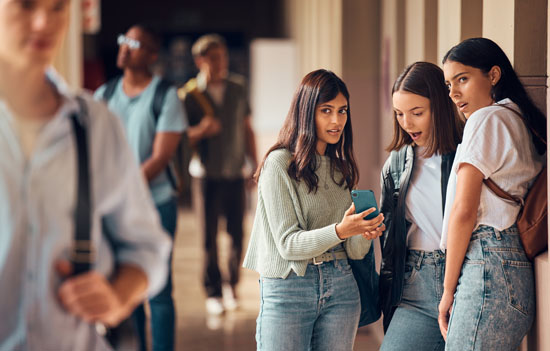
Samira's experience with bullying is echoed in millions of young people around the world. According to global data, bullying victimization is one of the most significant risk factors for anxiety disorders in adolescents and young adults. In 2021 alone, bullying accounted for over 1.7 million DALYs globally, representing nearly 15% of the total burden of anxiety disorders linked to both bullying and childhood sexual abuse.

In South Asia, where Samira lives, bullying-related anxiety disorders contributed to nearly 19% of all anxiety-related DALYs—the highest proportion globally. This suggests not only a high prevalence of bullying but also limited access to mental health support and intervention.

A group of students looking at a phone in shock, while one of them stares at another student

The psychological toll of bullying is profound. Victims often experience:

  • panic attacks
  • social withdrawal
  • sleep disturbances
  • academic decline
  • low self-esteem
  • suicidal ideation

Yet in many regions, bullying is still dismissed as a "normal" part of growing up. Schools may lack the resources or training to address it effectively. Parents may not recognize the signs. And students, fearing stigma or retaliation, often suffer in silence.

Samira eventually found help through a community mental health initiative, but many others do not. Her story is a call to action: to treat bullying not as a disciplinary issue but as a public health crisis.

3. On Your Own

Which of the following are consequences of bullying-related anxiety disorders? Select the four that apply.

A Pandemic of Pressure

Samira's stress around the COVID-19 pandemic was echoed worldwide. Between 2019 and 2021, the incidence of anxiety disorders among youth aged 10–24 rose sharply, with an annual percent change of 12.5%. This spike was statistically significant across all age groups, with the steepest increases in the 20–24 range. The pandemic didn't create anxiety, but it amplified every existing vulnerability.

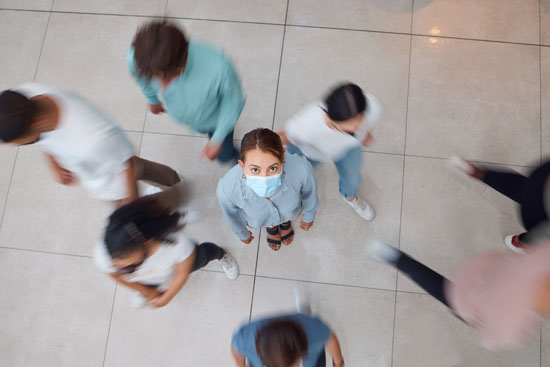
Psychologically, the pandemic introduced a perfect storm of risk factors:

  • social isolation from peers and mentors
  • academic disruption and pressure to adapt to online learning
  • economic instability in families
  • academic decline
  • health-related fears and grief
  • loss of routine, structure, and predictability

These stressors triggered or worsened anxiety symptoms in millions of young people. For many, the lack of access to in-person counseling or school-based support systems meant their suffering went unnoticed and untreated.

A person with a mask on, looking up while other people pass

Governments and organizations responded with emergency mental health measures:

  • hotlines and virtual therapy platforms
  • mindfulness and self-care campaigns
  • community outreach programs
  • online peer support groups

While these efforts helped, they often arrived too late or failed to reach the most vulnerable populations, especially in low- and middle-SDI regions where digital access was limited.

The pandemic revealed that adolescent mental health is fragile, and systems to support it are often underprepared. The sharp rise in anxiety disorders during this period wasn't just a temporary spike; it was a signal that modern life, even before COVID-19, was placing unsustainable pressure on young minds.

4. On Your Own

Determine whether the following statement is true or false.

From 2019 to 2021, the annual percent change in adolescent anxiety incidence was approximately 20%.

Global Crisis

Samira's journey from confident student to isolated teen mirrors a global crisis that has quietly intensified over the past 3 decades. Anxiety disorders among adolescents and young adults have surged, with the sharpest increases occurring in the wake of the COVID-19 pandemic. However, this isn't just a story about numbers; it's about lives interrupted, dreams deferred, and futures reshaped by invisible burdens.

Mental health is not just a personal issue but a public health priority. The burden of anxiety is shaped by cultural norms, economic pressures, educational systems, and global events. And while high-SDI regions may have better access to care, they also face rising rates of anxiety, suggesting that development alone does not protect against psychological distress.

Samira eventually found support, reconnected with her goals, and began healing. For many others, though, that path remains out of reach. As future psychologists, educators, and changemakers, your role is not just to understand anxiety, but to help rewrite the stories of those who live with it.

Reflect & Respond

Answer the following questions to reflect on key ideas from the case study. Remember to print your work before leaving this page!

  1. How do cultural and socioeconomic factors influence the diagnosis and treatment of anxiety disorders in adolescents across different regions?
  2. In what ways did the COVID-19 pandemic expose weaknesses in global mental health systems, especially for young people?
  3. Why might bullying have such a lasting psychological impact, and how can schools and communities better address it?
  4. What role does gender play in the prevalence and experience of anxiety disorders among youth, and how should interventions be tailored accordingly?
  5. If you were designing a mental health initiative for adolescents in a middle-SDI region, what key components would you include to ensure accessibility and effectiveness?

References

ABC iview. (2025, March 18). Why are teens so anxious? | The role of a lifetime | ABC iview [Video]. YouTube. https://youtu.be/kScgZaubMIY?si=sLCm75y5qsjDmj9d

Bie, F., Yan, X., Xing, J., Wang, L., Xu, Y., Wang, G., Wang, Q., Guo, J., Qiao, J., & Rao, Z. (2024). Rising global burden of anxiety disorders among adolescents and young adults: Trends, risk factors, and the impact of socioeconomic disparities and COVID-19 from 1990 to 2021. Frontiers in Psychiatry, 15, Article 1489427. https://doi.org/10.3389/fpsyt.2024.1489427
This is an open-access article distributed under the terms of the Creative Commons Attribution 4.0 International License (CC-BY 4.0).

Photo Credits

highwaystarz on Adobe Stock. "Unhappy Girl Being Gossiped About By School Friends In Classroom."

fizkes on Adobe Stock. "Sad thoughtful teen girl sits on chair feels depressed, offended or lonely, upset young woman suffers from abuse, harassment or heartbreak, grieving lady or violence victim has psychological problem."

D Lahoud/peopleimages.com on Adobe Stock. "College friends, phone and gossip or fake news about students on social media, internet and mobile app with teenager group talking. Smartphone bullying post of male and female people at university."

David L/peopleimages.com on Adobe Stock. "Covid, crowd and woman with face mask scared, fear and anxiety of coronavirus, disease and infection from above. Panic, danger and social distance in public with people walking inside spreading virus."