Are They Just Stressed?


Chapter 15: Psychological Disorders

Learning Outcomes

  • Describe the symptoms and diagnostic criteria for generalized anxiety disorder
  • Identify how anxiety may present differently across individuals and contexts
  • Evaluate the importance of peer support and early recognition of mental health symptoms

Key Terms

generalized anxiety disorder
characterized by a continuous state of excessive, uncontrollable, and pointless worry and apprehension

When Worry Becomes Something More

Tia, a sophomore, noticed that her roommate Cora had been acting differently. Cora, usually upbeat and organized, had started skipping meals, avoiding group hangouts, and staying up late obsessing over assignments.

A college student sitting on a bed in a messy room looking depressed

"She's just stressed," Tia told herself. But when Cora broke down crying over a minor mistake in her lab report, Tia began to worry. "I'm worried all the time, about nothing and everything," Cora admitted. "Even when things go okay, I'm waiting for something to go wrong."

Tia encouraged Cora to visit the campus counseling center. After an initial screening, Cora was diagnosed with generalized anxiety disorder. The counselor explained that while stress is a normal response to challenges, anxiety becomes a disorder when it's persistent, excessive, and interferes with daily life.

Cora began therapy and learned to identify her anxious thought patterns. She also joined a student support group, where she met others facing similar struggles. "I didn't realize how many people feel this way," she said. "It really helps to know I'm not the only one."

Tia continued to support Cora, learning how to listen without judgment and to encourage healthy coping strategies. Through their friendship, both students gained a deeper understanding of mental health and the power of early intervention.

1. On Your Own

What is generalized anxiety disorder? Select the best answer.

Recognizing the Signs

Many people experiencing generalized anxiety disorder do not seek help until symptoms become severe. Common signs include the following:

  • constant worry about performance at work, in academics, etc.
  • physical symptoms like fatigue, restlessness, or muscle tension
  • avoidance of social situations due to fear of embarrassment
  • difficulty concentrating or sleeping
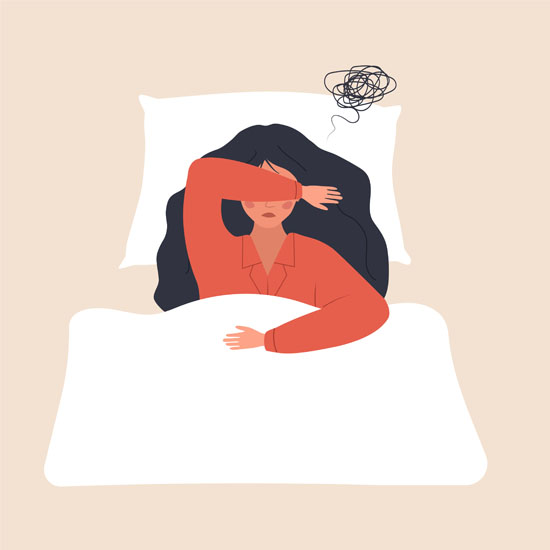
A cartoon of a person laying in bed with a knotted up thought cloud above their head

Social stigma often delays treatment. People often fear being labeled "dramatic" or "weak," which can prevent them from reaching out. Education about anxiety symptoms can lead to earlier recognition and better outcomes.

2. On Your Own

Determine whether the following statement is true or false.

Students with generalized anxiety disorder often experience excessive worry but no physical symptoms that interfere with daily life.

Incorrect. Individuals with generalized anxiety disorder often experience excessive worry and physical symptoms that interfere with daily life. (true)
Correct! This statement is false. Physical symptoms that interfere with daily life do occur in individuals with generalized anxiety disorder. (false)

Cora's Turning Point

After several weeks of therapy, Cora began practicing mindfulness and journaling. She learned to challenge her anxious thoughts and replace them with more balanced ones.

One entry read: "If I'm late to class, I'll fail out and lose my scholarship." Her therapist helped her reframe it: "A bad day doesn't define me or my future. I'm doing my best, and that's enough."

Cora still had anxious moments, but she felt more equipped to handle them. She also became an advocate for mental health on campus, sharing her story during orientation events.

Two college students studying and smiling

Tia reflected on the experience: "I used to think anxiety was just stress. Now I know it's deeper and that being there for someone can make a real difference."

3. On Your Own

What are common symptoms of generalized anxiety disorder? Select the three that apply.

Explore the Concept

Check out this short video, which summarizes the warning signs of generalized anxiety disorder.

Reflect & Respond

Answer the following questions to reflect on key ideas from the case study. Remember to print your work before leaving this page!

  1. How can peers help recognize the signs of anxiety in others?
  2. What are the risks of dismissing anxiety symptoms as "just stress"?
  3. How does stigma affect help-seeking behavior among college students?
  4. What strategies can campuses use to promote mental health awareness and early intervention?
  5. What does Cora's journey suggest about the importance of self-awareness and reframing anxious thoughts?

References

Cleveland Clinic. (2022, October 14). 4 warning signs of generalized anxiety disorder [Video]. YouTube. https://youtu.be/-ieJU5gklO4?si=_baVqlO_4Ya1jEg-

Sequeira, S. L., Silk, J. S., Jones, N. P., Forbes, E. E., Hanson, J. L., Hallion, L. S., & Ladouceur, C. D. (2025). Pathways to adolescent social anxiety: Testing interactions between neural social reward function and perceived social threat in daily life. Development and Psychopathology, 37(3), 1214—1229. https://doi.org/10.1017/S0954579424001068
This is an open-access article distributed under the terms of the Creative Commons Attribution 4.0 International License (CC-BY 4.0).

Photo Credits

Sam on Adobe Stock. "black woman with depression mental health disorder awareness."

KerronArt on Adobe stock. "Sleep problems. Tired and upset woman lying in bed and suffer from headache. Insomnia or sleep disorder concept. Vector illustration in flat cartoon style."

cherryandbees on Adobe Stock. "college female students studying in room."