Describe how workplace surveillance affects employee motivation and behavior
Apply principles of industrial-organizational psychology to workplace decision-making
Evaluate ethical considerations in employee monitoring
Key Terms
job analysis
determining and listing tasks associated with a particular job
organizational culture
values, visions, hierarchies, norms, and interactions between its employees; how an organization is run, how it operates, and how it makes decisions
The Monitoring Mandate
Jae-won, a mid-level manager at a growing tech firm, had built his team around flexibility and trust. His employees worked remotely, managed their own schedules, and consistently met project goals. But when the company's new CEO implemented a digital surveillance system to monitor employee activity, Jae-won felt the shift immediately. Employees' keystrokes, login times, and screen usage were all being logged.
"I get wanting accountability," he said, "but this feels like we're treating people like machines."
The change disrupted the team's rhythm. Work messages became terse, cameras stayed off during meetings, and creativity dipped. One developer, Samira, confided in Jae-won: "I feel like I'm being watched constantly. It's draining."
Jae-won noticed more signs of disengagement. Employees who once volunteered for extra projects now avoided meetings. A few began missing deadlines. These were early indicators of counterproductive work behaviors, often triggered when employees feel mistrusted or undervalued.
1. On Your Own
Culture Under Pressure
Jae-won consulted with an industrial-organizational psychologist, who emphasized the importance of organizational culture. "Surveillance can signal a lack of trust," she explained, "and that undermines employee engagement."
The psychologist recommended conducting a job analysis to clarify expectations and identify which tasks truly required monitoring. She also suggested gathering anonymous feedback to assess how the surveillance policy was affecting morale.
Jae-won followed through. The feedback revealed that employees felt the system was invasive and misaligned with the company's collaborative values. Many feared that data from the monitoring tools could be used unfairly in performance reviews.
2. On Your Own
Jae-won's Proposal
Jae-won presented the findings to leadership and proposed a revised approach: limit surveillance to specific roles where security was critical, allow employees to opt out of non-essential tracking, and increase transparency about how data would be used.
The CEO agreed to pilot the changes. Within weeks, team morale improved. Samira began contributing ideas again, and Jae-won noticed a renewed sense of collaboration.
"We're managing output," Jae-won said, "but we're also shaping a culture where people feel respected."
3. On Your Own
Explore the Concept
Check out this brief news report that summarizes employee surveillance in the U.S. workplace.
Reflect & Respond
Answer the following questions to reflect on key ideas from the case study. Remember to print your work before leaving this page!
How does surveillance affect employee engagement and organizational culture?
Why might surveillance lead to counterproductive work behaviors, even among previously engaged employees?
What role does job analysis play in designing fair monitoring systems?
How can organizations balance accountability with autonomy?
Reflect on your own experiences. Have you ever felt micromanaged or mistrusted at work? How did it affect your motivation?
References
Grisold, T., Seidel, S., Heck, M., & Berente, N. (2024). Digital surveillance in organizations. Business & Information Systems Engineering, 66, 401—410.https://doi.org/10.1007/s12599-024-00866-7 This is an open-access article distributed under the terms of the Creative Commons Attribution 4.0 International License (CC-BY 4.0).
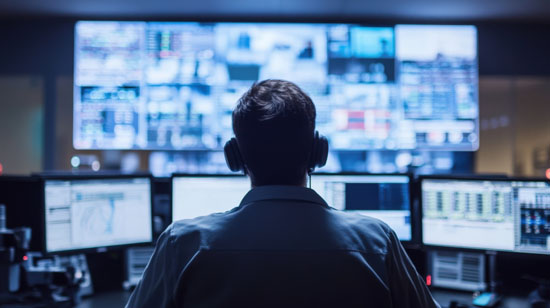
musa on Adobe Stock. "Security operator monitoring multiple screens in a control room."
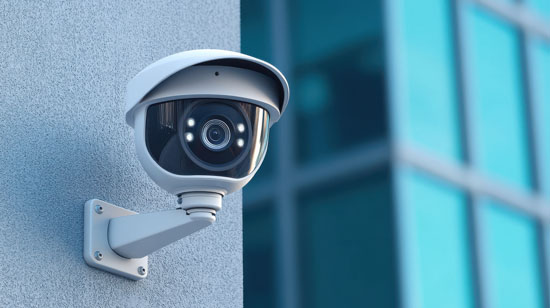
Emma on Adobe Stock. "A sleek surveillance camera mounted on a wall, overlooking a modern building with large glass windows."
Travel man on Adobe Stock. "Young asian business man using computer for a online business meeting with his colleagues about plan in video conference. back view of business man have webcam group conference with coworkers at home."