Why No One Helped


Chapter 12: Social Psychology

Learning Outcomes

  • Identify psychological factors that influence bystander intervention
  • Evaluate the role of group dynamics in emergency situations
  • Apply psychological reasoning to real-world examples of prosocial behavior

Key Terms

bystander effect
situation in which a witness or bystander does not volunteer to help a victim or person in distress
diffusion of responsibility
tendency for no one in a group to help because the responsibility to help is spread throughout the group
prosocial behavior
voluntary behavior with the intent to help other people
social norm
group's expectations regarding what is appropriate and acceptable for the thoughts and behavior of its members

The Sidewalk Incident

Chloe was walking back from her evening class when she saw a man stumble and collapse on the sidewalk. He didn't move. Passing cars slowed down, and several pedestrians glanced over, but no one approached him.
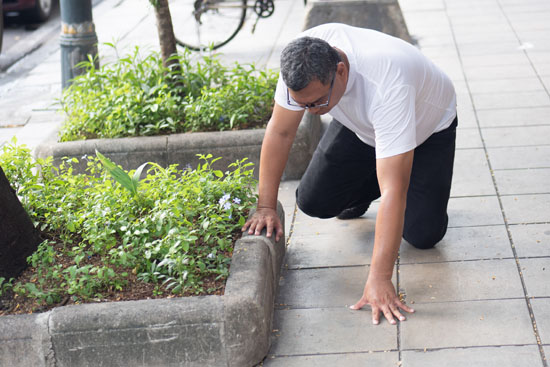
A person falling down on the sidewalk

"I thought someone else would help," Chloe said to her friends later. "There were so many people around."

She hesitated, unsure if the man was in real danger. A few others looked concerned but kept walking. Chloe felt a growing discomfort. "I didn't want to overreact," she explained. "What if he was just resting?"

Eventually, a cyclist stopped and called for help. Paramedics arrived and confirmed the man had suffered a mild stroke. Chloe was shaken. "I could've done something," she said. "But I froze."

Chloe's experience reflects the bystander effect, a phenomenon where individuals are less likely to help in emergencies when others are present. This is often driven by diffusion of responsibility: the assumption that someone else will intervene.

In Chloe's case, pluralistic ignorance also played a role. Because no one else was acting, she assumed the situation wasn't serious. But everyone else was likely thinking the same thing.

1. On Your Own

What illustrates diffusion of responsibility? Select the best answer.

Why We Hesitate

In emergencies, people often look to others for cues on how to behave. If no one reacts, individuals may assume help isn't needed. This is especially true in ambiguous situations, where the need for intervention isn't clear.

Social norms also influence behavior. In public spaces, people may worry about appearing dramatic or intrusive. These concerns can override instincts to help.

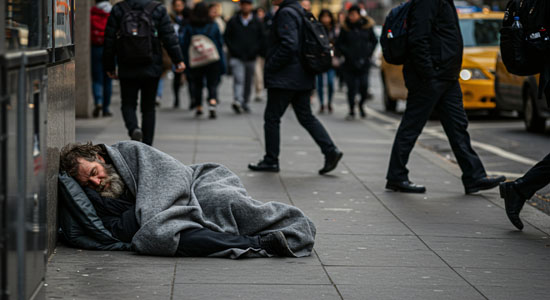
A homeless person sleeping on the sidewalk

While the bystander effect is powerful, it's not inevitable. Training in emergency response, awareness of psychological biases, and strong prosocial values can increase the likelihood of intervention.

2. On Your Own

Determine whether the following statement is true or false.

The bystander effect occurs when the presence of others increases the likelihood of helping.

Chloe's Reflection

After the incident, Chloe attended a campus workshop on emergency response. She learned how to assess situations quickly and how to act confidently. "I realized I don't have to be perfect," she reflected. "I just have to be willing to help."

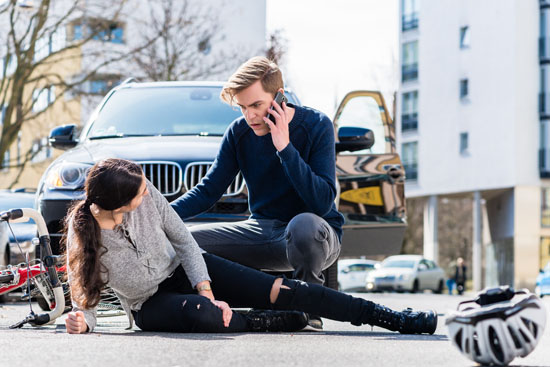
A person calling an ambulance for someone who was hit by a car

Chloe's story shows how understanding social psychology can empower individuals to act. The first step towards compassion and responsiveness in the moments that matter is recognizing the forces that hold us back.

3. On Your Own

What are strategies to reduce the bystander effect? Select the two that apply.

Explore the Concept

Check out this short video of people testing the bystander effect in real life.

Reflect & Respond

Answer the following questions to reflect on key ideas from the case study. Remember to print your work before leaving this page!

  1. What psychological factors contribute to the bystander effect?
  2. How does pluralistic ignorance affect group behavior?
  3. What can individuals do to overcome hesitation in emergency situations?
  4. Reflect on a time you witnessed someone in need. What influenced your decision to act or not act?
  5. What does Chloe's story suggest about the importance of self-awareness and preparation in responding to emergencies?

References

Coolpsychologist. (2009, June 9). THE BYSTANDER EFFECT [Video]. YouTube. https://youtu.be/OSsPfbup0ac?si=XuVL7yiOaoBOHWjP

Walker, J., Kelty, S. F., & Ng Tseung-Wong, C. (2024). Bystander intervention in coercive control: Do relationship to the victim, bystander gender, and concerns influence willingness to intervene? Journal of Interpersonal Violence, 39(15–16), 3791–3815. https://doi.org/10.1177/08862605241234350
This is an open-access article distributed under the terms of the Creative Commons Attribution 4.0 International License (CC-BY 4.0).

Photo Credits

9nong on Adobe Stock. "old man falling down, senior accident concept."

Eric on Adobe Stock. "Economic Hardship Leaves Man on Streets While Society Walks Past Without Offering a Glance."

Kzenon on Adobe Stock. "Full length view of a worried young driver calling the ambulance after hitting and injuring accidentally a female bicyclist on a city street."