The Group Project That Got Personal
Desi, a first-year college student, was excited to work on her first group project in her Intro to Psychology class. She was paired with three classmates, including Alex, who immediately took charge. At first, Desi appreciated Alex's energy, but soon, she felt overwhelmed. Alex often interrupted her, dismissed her ideas, and insisted on doing things "his way."
"I don't know why, but he just pushes my buttons," Desi vented to her roommate. "I'm not usually this irritated by people."
In class, Desi learned about the Big Five personality traits, based on the Five Factor Model: openness, conscientiousness, extroversion, agreeableness, and neuroticism. She scored high in agreeableness and conscientiousness, while Alex seemed to display high extroversion and low agreeableness. Their personalities clashed, especially in stressful situations.
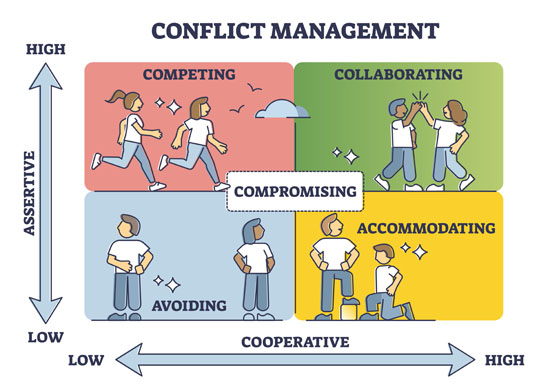
Their professor introduced the concept of temperament, explaining that some people are naturally more reactive or sensitive to conflict. Desi realized that her tendency to avoid confrontation was part of her temperament. She often used the obliging conflict management style, putting others' needs before her own to keep the peace.
But this time, it wasn't working. Desi felt anxious, frustrated, and unheard.

The class discussed how conflict management styles can affect school adjustment. Desi learned that styles like integrating (working together to find a solution) and compromising (finding middle ground) are often more effective than avoiding or obliging. She decided to try a new approach.
At their next meeting, Desi calmly said, "I think we both want this project to succeed, but I feel like my ideas aren't being heard. Can we find a way to work together?"
Alex paused, then nodded. "Fair enough. Let's make sure everyone gets a say."