Quirky or Concerning?


Chapter 11: Personality

Learning Outcomes

  • Describe the relationship between personality traits and psychological disorders
  • Identify how borderline personality features and neuroticism relate to functional impairment
  • Apply psychological reasoning to complex clinical presentations involving comorbidity

Key Terms

neurosis
tendency to experience negative emotions
personality
long-standing traits and patterns that propel individuals to consistently think, feel, and behave in specific ways
traits
characteristic ways of behaving

When Traits Become Trouble

Sasha was a senior psychology major known for her sharp insights and intense energy. She often led group projects with passion, but her classmates sometimes found her unpredictable. One week she was enthusiastic and driven; the next, she withdrew completely or reacted emotionally to minor setbacks.
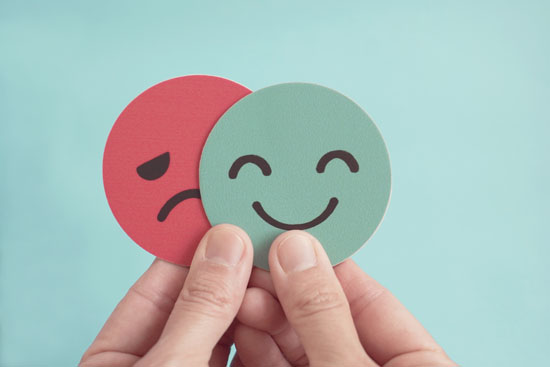
Hands holding a smiley face and a sad face

In her abnormal psychology seminar, Sasha volunteered to present on the overlap between personality traits and mental illness. As she prepared, she came across a study examining how borderline personality features, neurosis, and childhood trauma predicted functional impairment in individuals with bipolar disorder type I (BD-I).

The findings struck a chord. The study showed that even in remission, individuals with BD-I experienced significant difficulties in daily functioning. Surprisingly, it wasn't just mood symptoms that predicted these challenges; it was borderline personality features that had the strongest link to both self-rated and clinician-rated impairment. Neuroticism and childhood trauma were also correlated, but only borderline traits independently predicted poor functioning.

Sasha paused. She had always scored high in neuroticism on personality inventories and had a history of emotional ups and downs. She also recognized patterns of emotional dysregulation, impulsivity, and interpersonal instability in herself, which are the hallmarks of borderline personality disorder.

"I thought I was just sensitive," she told her professor. "But now I wonder if there's more going on."

Her professor explained that personality exists on a continuum. Traits like neuroticism can be adaptive in moderation, but when they become extreme and inflexible, they may cross into the territory of personality disorders. The line between "quirky" and "clinical" isn't always clear, but understanding that line is essential for early intervention and support.

1. On Your Own

What describes the concept of comorbidity? Select the best answer.

The Personality-Pathology Connection

The study Sasha read emphasized that borderline personality features, even in the absence of a formal diagnosis, can significantly impact a person's ability to function. These features include unstable self-image, intense emotional reactions, impulsivity, and difficulty maintaining relationships.

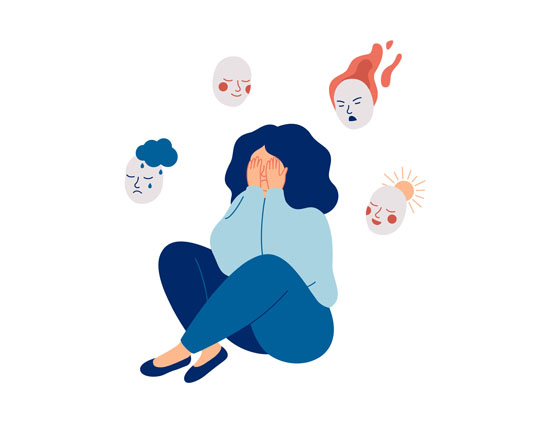
A person with their hands to their face surrounded by representations of different emotions

The researchers also found that neuroticism, a trait associated with emotional reactivity and vulnerability to stress, was elevated in individuals with BD-I. While neuroticism was correlated with functional impairment, it did not independently predict it when borderline traits were accounted for.

Childhood trauma, particularly emotional and physical abuse, was also more common in the BD-I group and linked to both borderline features and neuroticism. This supports the idea that early adverse experiences can shape personality development and increase vulnerability to psychopathology.

Sasha reflected on how these findings applied to her own life. She had never been diagnosed with a mood disorder, but she recognized how her early experiences and personality traits influenced her relationships, academic performance, and emotional well-being.

2. On Your Own

Determine whether the following statement is true or false.

Borderline personality disorder is characterized by instability in mood, self-image, and music preferences.

Sasha's Next Steps

After her presentation, Sasha scheduled a meeting with the campus counseling center. She wasn't just seeking a diagnosis; she was seeking understanding. Through therapy, she began to explore how her personality traits, emotional patterns, and past experiences shaped her current challenges.

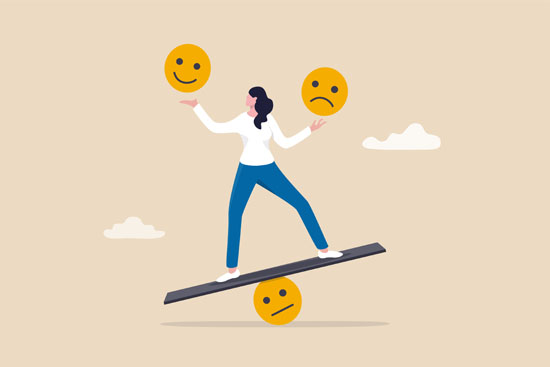
A person balancing on a seesaw holding up different emotions

"I used to think I had to be either 'fine' or 'broken,'" she said. "Now I see that mental health is more like a spectrum. And knowing where I am on that spectrum helps me take better care of myself."

3. On Your Own

Which of the following are associated with borderline personality features? Select the two that apply.

Explore the Concept

Check out this video for an explanation of borderline personality disorder.

Reflect & Respond

Answer the following questions to reflect on key ideas from the case study. Remember to print your work before leaving this page!

  1. How can personality traits like neuroticism contribute to psychological distress?
  2. What is the difference between a personality trait and a personality disorder?
  3. How might childhood trauma influence personality development?
  4. Reflect on your own traits. Which ones help you thrive, and which ones sometimes get in your way?
  5. What does Sasha's statement about mental health being a spectrum suggest about stigma and self-care?

References

Aydın, E. F., & Koca Laçin, T. (2024). The association between borderline personality disorder, childhood trauma, neuroticism, and self-rated or clinician-rated functional impairment in euthymic bipolar disorder-1 patients. Frontiers in Psychiatry, 15, Article 1444583. https://doi.org/10.3389/fpsyt.2024.1444583
This is an open-access article distributed under the terms of the Creative Commons Attribution 4.0 International License (CC-BY 4.0).

BorderlinerNotes. (2019, April 19). The "father of BPD" explains BPD (borderline personality disorder) | JOHN GUNDERSON [Video]. YouTube. https://youtu.be/h15OnmUqFj8?si=upe5kykY5uFp0xsD

Photo Credits

SewcreamStudio on Adobe Stock. "Hands holding sad face hiding behind happy face, bipolar and depression, mental health, split personality, mood change concept."

Mary Long on Adobe Stock. "Tired woman holds masks with positive and negative emotions. Girl plays a role, or feels fake. Personality change Disorder concept. Vector illustration."

Nuthawut on Adobe Stock. "Emotional intelligence, balance emotion control feeling between work stressed or sadness and happy lifestyle concept, mindful calm woman using her hand to balance smile and sad face."