The Psychology of Picking a Path
Julio was a sophomore who had changed his major 3 times. He started in biology, switched to marketing, and was now considering psychology. "I just want to find something that fits," he told his advisor. "But I don't know what that means."

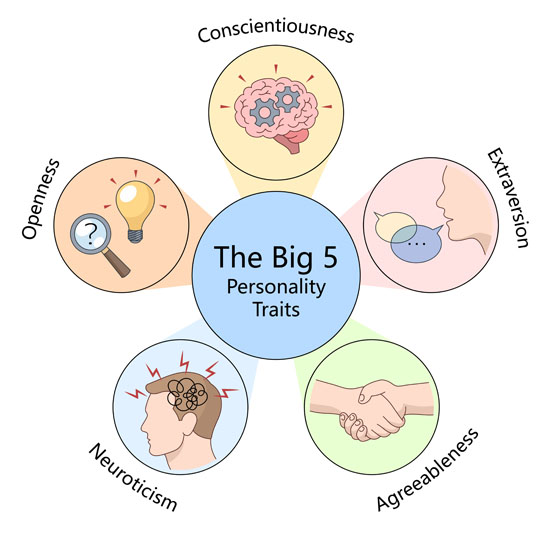
During a career development seminar, Julio took a personality inventory based on the Five Factor Model. His results showed high openness, moderate agreeableness, and low conscientiousness. The facilitator explained that students high in openness often thrive in majors that encourage creativity, abstract thinking, and exploration, like philosophy, psychology, or the arts.
Julio was intrigued. He had always loved deep conversations and thinking about human behavior, but he had dismissed psychology as too abstract. Now, he wondered if his personality had been nudging him toward it all along.
The seminar also introduced research showing that students tend to choose majors that align with their personality traits. For example, those high in conscientiousness often prefer structured fields like accounting or engineering, while those high in extroversion may gravitate toward communications or business.
Julio reflected on his past choices. Biology had felt too rigid. Marketing was exciting but didn't satisfy his curiosity. Psychology, on the other hand, seemed to match his self-concept: his view of himself as thoughtful, curious, and empathetic.
"I guess I've been trying to fit into majors that didn't fit me," he said. "Maybe it's time to pick something that fits who I am."