What Shapes Who We Are


Chapter 10: Gender, Sex, and Sexuality

Learning Outcomes

  • Identify key developmental milestones in gender identity formation across early stages of development
  • Analyze the relationship between gender expression and self-identification using case-based evidence
  • Evaluate the impact of social support and affirmation on psychological outcomes in gender-diverse children

Key Terms

cisgender
people whose gender identity aligns with the sex they were assigned at birth
gender expression
how a person presents themselves externally, including physical appearance and behavior
gender identity
a person's deeply held internal perception of their gender
transgender
people whose gender identity is different from the sex they were assigned at birth

Preferences From a Young Age

Vic was always curious. From the time they could walk, they explored the world with wide eyes and a fearless spirit. As they developed, Vic's parents began to notice patterns in their play. They gravitated toward trucks, dinosaurs, and building blocks but also enjoyed dressing up in costumes and pretending to be a princess. Their interests didn't fit neatly into one category.

As time went on, Vic's expression became clearer. They started choosing their own clothes, often favoring bright colors, glitter, and accessories like tiaras and bracelets. Their parents were supportive but curious: Was Vic just exploring, or was this part of a deeper identity forming?
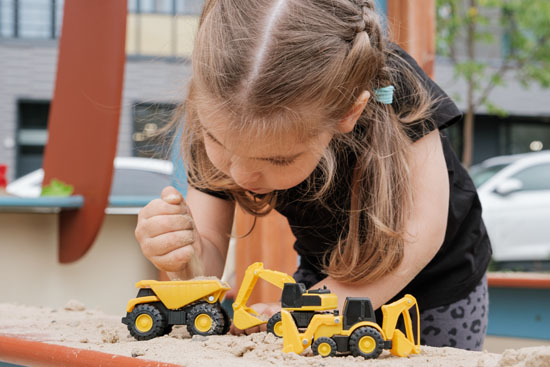
A child playing with trucks in a sandbox

In early social settings, Vic's teachers observed that they played with all children, regardless of gender. Over time, Vic began to show a preference for playing with girls. Their clothing choices became more consistent with pink dresses every day, even on field trips or messy art days. Their parents wondered if this was just a phase, or something more meaningful.

As they developed, Vic confidently identified as a girl. Their preferences, peer groups, and self-identification aligned. Over time, Vic's gender identity remained stable, even as their clothing choices became more flexible. Some days they wore jeans and a hoodie; other days they chose skirts and sparkles. Their peer group remained mostly girls, and they expressed comfort and happiness in their identity.

1. On Your Own

Which of the following describes Vic's gender identity development? Select the best answer.

Does Preference Equal Identity?

Vic's story reflects findings from developmental psychology research. In the early stages of development, individuals often begin to show gendered preferences, such as toy or clothing choices, before they can verbally label their gender. These preferences can be influenced by both biological factors (like sensory stimulation) and social factors (like parental modeling or peer interactions). However, these early preferences don't always predict future gender identity. For example, a child who prefers "masculine" toys may still identify as a girl and vice versa.

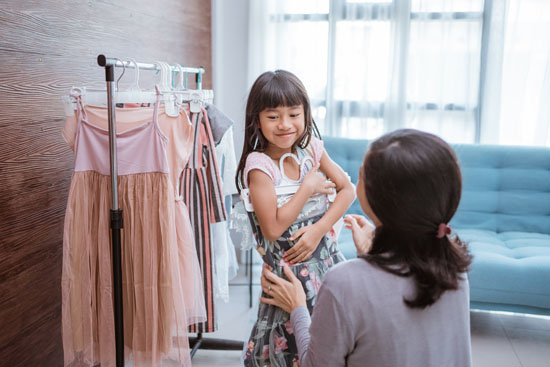
A child and their parent choosing a dress from a clothing rack

In Vic's case, their early preferences aligned with stereotypical femininity, but their gender identity wasn't clearly expressed until later in development. Research shows that self-identification tends to stabilize later in development, even if gender expression (like clothing or toy choices) becomes more flexible. This means that while individuals may experiment with how they present themselves, their internal sense of gender often remains consistent once it's formed.

2. On Your Own

Vic's friend Percy prefers trucks and dinosaurs but identifies as a girl. What does this suggest? Select the best answer.

Preference Patterns

Studies show that gender identity is not a single trait; it's a combination of self-identification, gender expression, peer preferences, and social feedback. These components often develop at different rates and may not always align. For example, an individual may express themselves in a gendered way through clothing or play but not yet have the cognitive ability to label their gender identity. Clothing preferences tend to peak in rigidity during early development years, when children are learning social norms and trying to "fit in."

Peer preferences also play a role. Children often begin to show same-gender peer preferences during early social development, which can reinforce their sense of belonging and identity. In Vic's case, their early preferences were stereotypical, their peer group became more gendered, and their self-identification stabilized later in development. This pattern is consistent with longitudinal research showing that gender identity becomes more stable as development progresses, even as gender expression may become more flexible.

A group of friends, all of which are male

3. On Your Own

Which of the following are common measures used to study gender identity development? Select the four that apply.

Explore the Concept

Engage with this video to learn more about gender identity from a scientific standpoint.

Journey to Identity

Vic's journey highlights the importance of understanding gender identity as a spectrum rather than a binary. Research shows that binary measures, like "male" or "female," often fail to capture the full experience of gender-diverse individuals. Many children, including cisgender and transgender youth, report feeling "mostly like a boy" or "mostly like a girl," rather than 100% one or the other. This suggests that gender identity is more nuanced than traditional categories allow.

Affirming an individual has expressed identity, whether through name, pronouns, clothing, or social support, can lead to better psychological outcomes. Studies show that children who are supported in their gender identity experience lower levels of anxiety and depression and higher levels of well-being. As future psychologists, educators, or caregivers, it's important to recognize that gender identity develops over time through a complex interaction of biological, social, and cognitive factors. Supporting children like Vic means listening, learning, and creating environments where they can thrive.

Reflect & Respond

Answer the following questions to reflect on key ideas from the case study. Remember to print your work before leaving this page!

  1. How did Vic's early preferences (toys, clothing, peer groups) help shape their gender identity over time? Can you think of examples from your own life or others where preferences influenced identity?
  2. Why is it important to distinguish between gender identity and gender expression when working with children and adolescents? How might misunderstanding this difference affect a child's development?
  3. Vic's gender identity remained stable even as their clothing choices became more flexible. What does this tell us about the relationship between external behaviors and internal identity?
  4. How can caregivers, educators, and psychologists create environments that support children like Vic in exploring and affirming their gender identity?
  5. After learning about the different measures of gender identity (self-identification, peer preferences, clothing, activities), which do you think is the most reliable for understanding a child's gender identity, and why?

References

Fisher, E., Wright, S., & Sargeant, C. (2025). What do measures of gender identity tell us about gender identity over time? British Journal of Developmental Psychology, 43(2), 319–341. https://doi.org/10.1111/bjdp.12491
This is an open-access article distributed under the terms of the Creative Commons Attribution 4.0 International License (CC-BY 4.0).

Seeker. (2018, June 23). What we know about gender identity according to science [Video]. YouTube. https://youtu.be/XMRlqaY6eVU?si=mOCGm3KtZzzukvsV

Photo Credits

Руслан Галиуллин on Adobe Stock. "little girl playing with toy trucks in sandbox outdoors."

Odua Images on Adobe Stock. "mom and kid choose beautiful dress."

Sabrina on Adobe Stock. "Group of happy multiethnic boys smiling on camera at school outdoor."